AMC Management Software: Contracts, Renewals and Vendor SLAs
Published on 10/21/2026 • Updated on 10/22/2026
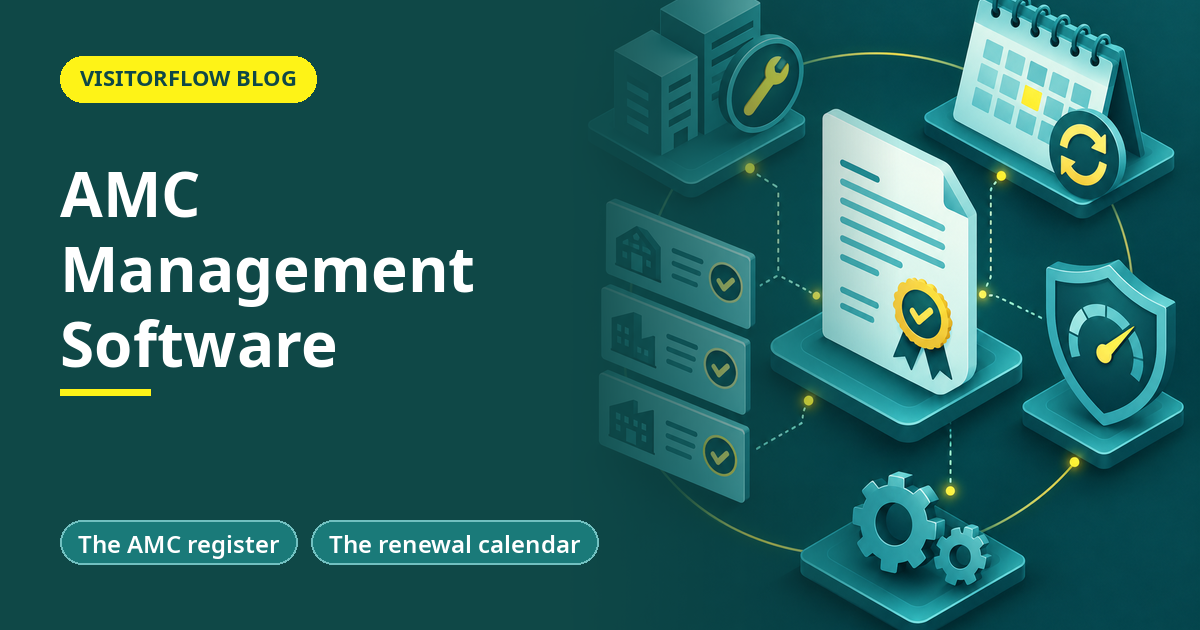
The fire alarm panel at a commercial building fails its quarterly test, and the facility manager calls the AMC vendor to learn that the AMC expired five weeks ago. Nobody let it lapse on purpose; the renewal date lived in a contract PDF in a departed executive's email, and the vendor, who knows exactly when contracts expire, chose not to mention it. The repair is now billable, the fire NOC documentation has a gap, and the building has been uninsured against this specific failure for over a month. The renewal letter that would have cost a signature instead costs a repair invoice and a compliance explanation.
Annual maintenance contracts are how facilities buy peace of mind, and the peace lasts exactly as long as someone tracks the contract. This guide covers what an AMC register needs, the renewal calendar that ends lapse-by-forgetting, how to measure whether the vendor is delivering the SLA you pay for, and how the data changes the renewal negotiation. It builds on our maintenance helpdesk overview and our preventive maintenance schedule guide.
On this page
The AMC register
A working AMC register is one row per contract with the fields that answer the questions that actually arise: the assets covered (linked to the asset register, so the fire panel knows it has a contract), the vendor with their current contact, the start and end dates, the scope in plain words (comprehensive with parts, or labour-only; quarterly visits or monthly), the SLA terms (response and resolution hours), the annual value, and the document itself attached. When any asset misbehaves, the first question "is this under AMC" is a lookup, not a hunt.
The scope field deserves care, because scope disputes are where AMC value leaks. "Comprehensive" contracts that quietly exclude the expensive parts, and labour-only contracts that everyone believes are comprehensive, produce the worst sentence in facilities management: "this is not covered, sir." Write the exclusions on the register row at signing, while the salesperson is still answering email. Six months later, the register's memory is better than everyone's, and it does not negotiate. When the register says the compressor contract excludes the motor, the conversation about who pays for the motor is short, factual, and happens before the failure rather than after it.
The renewal calendar
Every contract's end date generates two alerts: sixty days out, to decide whether to renew, renegotiate or re-tender, and thirty days out, to close the paperwork. Sixty days is the number that matters: it is the difference between a renewal you chose and a renewal you signed because the contract was about to lapse and the vendor knew it. The lapse-by-forgetting scenario from the opening story is a calendar failure, and a calendar is the cheapest software there is. Put the renewal decision on the calendar with the same seriousness as the contract itself, because the lapse is never a strategy, it is an accident with an invoice.
The calendar should also catch the quieter expiries riding on the same assets: warranty end dates (which decide whether a repair is free), insurance-linked compliance (fire systems whose AMC must be current for the NOC), and statutory inspection dates. One expiry view across all of them is worth more than four separate reminders in four inboxes, because the person who needs to act is usually the same person. One view also surfaces the clustering problem early: when six contracts expire in the same month, someone needs a longer runway than sixty days.
Holding the vendor to the SLA
The AMC's promise is not the contract; it is the scheduled visit that actually happened and the breakdown call that was answered inside the SLA. Track both as work orders. Preventive visits: the contract's quarterly visit generates a work order with a checklist, and the vendor's technician closes it on a phone with readings and photos, so "we came every quarter" becomes verifiable rather than asserted. Breakdown calls: every call against an AMC asset logs the reported time, the vendor's arrival and the resolution, so the SLA has a measured record instead of two memories.
The quarterly review then runs on the vendor's own numbers: visits delivered versus contracted, average response against the SLA, repeat failures on the same asset. Most vendors improve the quarter they learn they are being measured; the ones who do not are telling you something the renewal decision needs. Publish the scorecard to the vendor quarterly; a shared number is a shared standard, and most SLA arguments are really disputes about what happened, which the record settles in advance. This is the same measurement discipline our maintenance KPI dashboard guide recommends for in-house teams, applied to the people you pay.
The renewal negotiation, with data
The renewal conversation changes character when you hold the record. Without data, it is the vendor's invoice history against your impression. With it, you know: how many breakdowns the assets actually had (a quiet year is a price-cut argument or a scope-reduction argument), whether the SLA was met (missed SLAs are a discount or an exit), which parts were consumed and by whom (the scope dispute killer), and what the market would charge (because sixty days' notice gave you time to take one competing quote).
Facilities that run this discipline report the same outcomes in rotation: renewals closed 10-20 percent under the opening quote, scope corrected to match actual consumption, and the occasional confident walk-away from a vendor whose numbers could not support their story. None of these require aggression; they require arriving with the record. The vendor who serviced you well all year benefits too, because the record is also proof of that.
Contracts that track themselves
VisitorFlow's maintenance helpdesk links AMCs to assets, alerts before every expiry, and logs every vendor visit and breakdown call against the SLA.
Explore Maintenance HelpdeskSetting it up in a fortnight
Week one is collection: every contract PDF, warranty card and vendor contact, gathered into the register with end dates and scopes. This is the only tedious step, and it is a day or two of effort for a typical facility, not a project; the intern-level work of finding documents is exactly the work the register then makes unnecessary forever. Week two is activation: alerts set at sixty and thirty days, assets linked, and the first scheduled vendor visit converted into a checklist work order so the SLA record starts accumulating from the next visit.
From then on the register maintains itself through use: every visit closes a work order, every breakdown logs against a contract, every renewal decision arrives with sixty days of warning and a year of evidence. The facility that runs this for a year has something its predecessor never had: an institutional memory of every promise anyone made about its equipment, and whether it was kept.
Reader Q&A
Our vendors send their own service reports. Why track separately?
Because the vendor's report is written by the party being measured. Your own work-order record of their visits and response times is the only version usable in a dispute or a renewal; the two records agreeing is normal, and the one time they disagree is the time you need yours.
How do we get vendor technicians to close our checklists?
Make it a condition of the visit: the gate or the supervisor hands over the checklist on a phone, and closure with readings and a photo is what marks the visit complete. Vendors accept it within one cycle because it is faster than their own paperwork, and it protects them too.
Should small contracts go in the register too?
Yes, because the lapse risk scales with forgettability, not value. The water-purifier AMC is small money; the fire panel and the lift are compliance. A register that holds only big contracts is a register that lets the small compliance-critical ones slip, and slipping is the failure mode.
What is the difference between AMC tracking and warranty tracking?
Same calendar, different counterparty. Warranty is the manufacturer's promise with a fixed end; AMC is a vendor's renewable promise with an SLA. Both belong on the asset record and both alert before expiry, because the question "who pays for this repair" depends on knowing both dates.
Can the system handle multi-year and multi-site contracts?
Yes; one contract row can cover assets across sites with a single renewal date, or split per site when the sites negotiate separately. The rule is that the register mirrors the paper: if the PDF is one contract, the register is one row.
How fast is the payback on AMC tracking?
Usually the first avoided lapse or the first data-backed renewal. One billable repair that should have been covered, or one 15 percent renewal saving on a mid-size contract, typically exceeds a year of the software. The calendar is the cheapest insurance in the facility budget.
Bottom line
This week, list every AMC and warranty on your critical assets with its end date, and check whether any expired in the last ninety days. Most facilities find at least one surprise, and finding it on a Tuesday is infinitely better than finding it during a breakdown.
This quarter, move the register and the renewal calendar into the same system that runs the work orders, so vendor visits and SLA performance accumulate into the record the next negotiation will need. The vendor knows when your contract expires; the register is how you know too.
Never lapse by forgetting again
VisitorFlow's maintenance helpdesk tracks every AMC and warranty, alerts before every expiry, and measures every vendor against their SLA.
Explore Maintenance Helpdesk See Visitor Management Book a Free Demo
Ed Jhonson is a Sourcing & Marketing Expert who writes content related to Technology and Engineering topics.
- From Register Book to Software: Digitizing the Gate Pass
- Inter-Branch Transfer Gate Pass: Keep Stock True Across Units
- Material Inward Gate Pass: Link the Gate with the GRN
- E-Way Bill vs Gate Pass: What Each Document Does
- Gate Pass System for Engineering and Fabrication Workshops
- Gate Pass Software for Pharma and Chemical Plants
- Office Facility Maintenance Checklist: Daily, Weekly, Monthly
- Breakdown Maintenance Log: Record, Analyze, Reduce
- Maintenance KPIs and Dashboards: What to Review Weekly
- Spare Parts Management Software for Maintenance Teams