Asset Maintenance Management Software: A Practical Guide
Published on 10/21/2026 • Updated on 10/22/2026
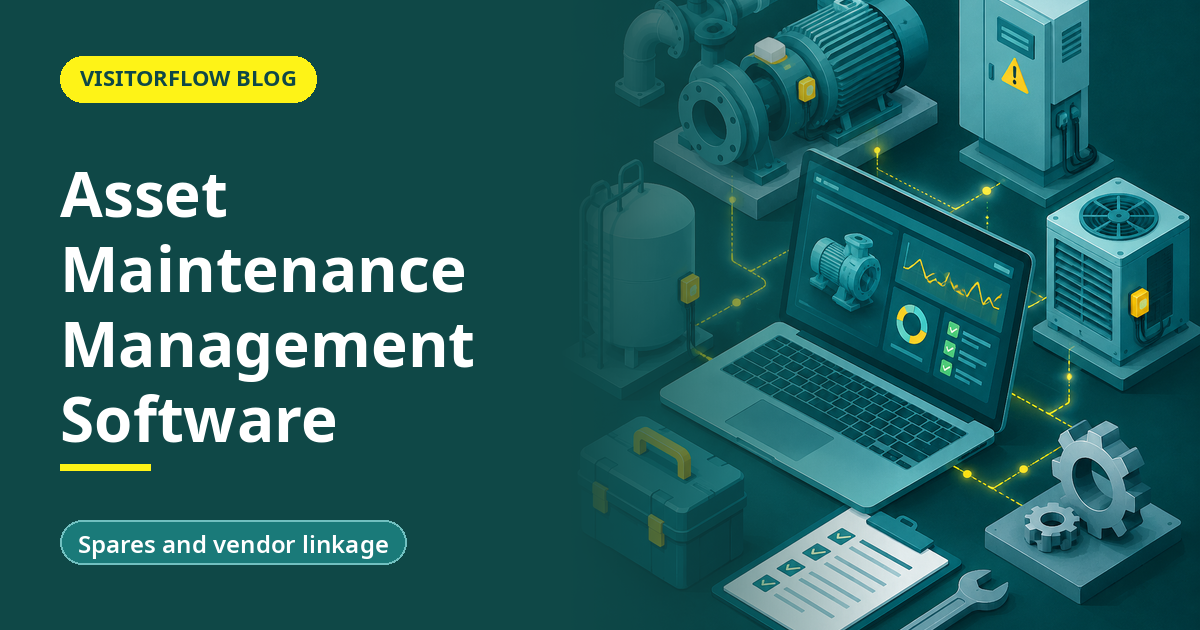
The DG set at a hospital's facility block fails during a power cut, and the investigation lasts eleven minutes because there is nothing to investigate. No service history anyone can find, no record of the last oil change, a warranty document in somebody's email from 2021, and a technician whose number left with the facility executive who resigned in March. The generator is four years old and has been "maintained" the entire time; it has simply been maintained in a way that left no memory. The replacement cost is a number the CFO will now learn from an incident report instead of a planned budget line.
Every facility runs on assets it cannot fully account for: HVAC units, DG sets, lifts, compressors, fire systems, the works. Asset maintenance management software exists to give those assets a memory. This guide covers what the asset register actually needs, how preventive schedules and work orders hang off it, what mobile logging changes, and how to roll it out without a six-month data-entry project. It builds on our maintenance management system buyer's guide and our preventive maintenance schedule guide.
On this page
The asset register that actually works
The difference between a register that works and a spreadsheet that decays is what hangs off each row. An asset record worth having holds: identity (a code, a category, a location precise enough that a new technician finds it), provenance (vendor, purchase date, warranty expiry, AMC status), documentation (manuals, warranty cards, SOPs attached to the record, not to someone's inbox), and a live history (every work order, spare part, reading and cost ever logged against it). When the DG set fails, the answer to "what do we know about this machine" is one screen, not an archaeological dig. That one screen is also what the next facility executive inherits, which is the point: the asset's memory stops resigning when people do.
Two disciplines make it stick. Criticality tagging: mark the ten percent of assets whose failure stops operations, hurts people, or voids compliance, and let those get the deepest records and the strictest schedules. And ownership: every asset has a named custodian who is notified when its warranty expires or its service lapses. Registers die of ambiguity; a named human per asset is the cheapest insurance the system offers. Review the register quarterly by criticality: assets that have moved floors, changed custodians or been scrapped get corrected in minutes while the change is still remembered, and the register stays a source of truth instead of a historical document.
Schedules, work orders and history
Preventive schedules hang directly off the asset register: each critical asset carries its service calendar (monthly HVAC filter check, quarterly DG load test, annual lift inspection), and the system converts the calendar into work orders with owners, checklists and due dates. The supervisor's morning view stops being a memory exercise and becomes a list: what is due, what is late, and whose name is on each. Missed services stop being silent, which is the whole point; the DG set that fails was not unlucky, it was un-serviced for three cycles and nobody's dashboard noticed. The overdue list is the single most valuable screen in the whole system; a facility that opens it every morning has already changed its maintenance culture.
Reactive work flows through the same record. A breakdown complaint becomes a work order against the asset, with the technician's notes, spares used and closure photo attached. Over a year this history becomes the facility's most useful dataset: which assets consume the most repair cost, which fail seasonally, which vendor's installations keep coming back. Replace-versus-repair stops being an argument and becomes a query. The same history settles warranty disputes, supports insurance claims, and answers the compliance auditor who wants maintenance records for the fire panel without anyone opening a cupboard. Our maintenance KPI dashboard guide covers the metrics that emerge once this data exists.
QR and mobile logging at the asset
Mechanism 01
A QR code on the machine is its front door
Print a QR label per asset and stick it on the machine. Scanning it opens that asset's record: history, open work orders, the manual, the "raise a complaint" button. The technician at the machine and the manager at the desk now read the same page, and the wrong-asset data entry that corrupts spreadsheets disappears.
Mechanism 02
Checklists with proof, not ticks
The service checklist lives on the phone: steps, readings with numeric ranges, and a photo where proof matters (filter condition, oil level, panel state). Pencil-whipping a paper checklist takes ten seconds; photographing each step takes the actual service. Compliance auditors can tell the difference, and so can the equipment.
Mechanism 03
Anyone can report, the system routes
The office worker who hears the compressor knocking scans the QR and reports it in twenty seconds; the system assigns it by category and shift, with an SLA clock. The corridor complaint that used to die in a WhatsApp group becomes a tracked work order, and the "nobody told maintenance" failure mode retires.
Rollout without the big bang
The classic failure is the six-month data-entry project that builds a perfect register for assets nobody has serviced in the meantime. Do the reverse. Week one: register the fifty most critical assets only, with codes, locations, warranty dates and QR labels. Week two: attach their preventive schedules and let the first work orders fire. Week three: open complaint reporting through the QR codes, so every repair lands on the register automatically. From then on, the register grows through use; every breakdown against an unregistered asset is the moment it gets registered, with its first work order already attached.
A month in, the system covers the assets that account for nearly all the risk; a year in, it covers nearly everything, and nobody ever did a data-entry project. The AMC and warranty dates captured along the way feed the renewal calendar, so the second-year dividend is the expiries that stop surprising you. Our AMC management software guide covers that calendar in depth.
Give every asset a memory
VisitorFlow's maintenance helpdesk runs the register, schedules, work orders and QR logging your facility actually keeps up to date.
Explore Maintenance HelpdeskSpares and vendor linkage
Two attachments multiply the register's value. Spare parts: each work order that consumes a part decrements stock and tags the asset, so the storeroom's mystery (we have three starters for a compressor we scrapped) stops compounding, and the "which assets eat which parts" question becomes answerable. Our spare parts management guide covers the min-max discipline that keeps the storeroom honest.
Vendors: every external service visit lands on the asset record with the technician's name and the checklist they completed. When the lift vendor claims quarterly service, the register answers with dates and photos, and when the same fault recurs three times across two vendors, the pattern has a home. The facility stops being the only party without records, which quietly changes every commercial conversation it has.
Reader Q&A
How many assets should we register before going live?
Fifty, chosen by criticality. The register grows through use after that; every breakdown on an unregistered asset registers it. Teams that wait for a complete register never go live, and completeness achieved through use is more accurate than completeness achieved through a project.
Will technicians actually log from their phones?
Yes, if logging is faster than the paper it replaces and if supervisors close the loop publicly. The QR checklist takes less time than the register book; adoption follows the first month where the supervisor runs the morning meeting off the dashboard and nothing else counts as done.
We have AMC vendors doing the servicing. Why do we need this?
Because the AMC is the claim and your register is the proof. AMC vendor visits logged as work orders with checklists tell you whether the contracted service actually happened; the renewal negotiation then runs on your data instead of the vendor's invoice history.
How does this differ from a full CMMS?
Scope and weight. A CMMS carries inventory, procurement and costing modules that plants with a maintenance department need; a facilities-focused tool covers register, schedules, work orders and spares-light tracking at a fraction of the rollout effort. Our buyer's guide maps the line.
Can it track warranty and AMC expiries?
Yes; every asset's warranty and AMC dates sit on its record, and the renewal calendar alerts the custodian 60 and 30 days out. The "warranty expired last month" discovery after a paid repair is the first thing this eliminates.
What is the first ROI we will see?
Missed services surfacing and one avoided breakdown usually pays the year. The quieter dividend is the renewal calendar and the replace-versus-repair queries in year two; our facility maintenance cost reduction guide quantifies the pattern.
Bottom line
This week, pick your ten most critical assets and ask for each one's service history, warranty status and manual. The time that takes is the cost of the current system, measured in the most expensive way: during a hypothetical emergency.
This quarter, register the critical fifty, hang the schedules off them, and let the work orders and QR complaints grow the register through use. The DG set that fails next year will fail in a building that knows exactly what it knew and when; that is the difference between an incident and a managed risk.
The register that grows itself
VisitorFlow's maintenance helpdesk starts with your critical fifty and builds the complete asset memory through daily use.
Explore Maintenance Helpdesk See Visitor Management Book a Free Demo
Ed Jhonson is a Sourcing & Marketing Expert who writes content related to Technology and Engineering topics.
- From Register Book to Software: Digitizing the Gate Pass
- Inter-Branch Transfer Gate Pass: Keep Stock True Across Units
- Material Inward Gate Pass: Link the Gate with the GRN
- E-Way Bill vs Gate Pass: What Each Document Does
- Gate Pass System for Engineering and Fabrication Workshops
- Gate Pass Software for Pharma and Chemical Plants
- Office Facility Maintenance Checklist: Daily, Weekly, Monthly
- Breakdown Maintenance Log: Record, Analyze, Reduce
- Maintenance KPIs and Dashboards: What to Review Weekly
- AMC Management Software: Contracts, Renewals and Vendor SLAs