Visitor Management for the Food Industry: Hygiene Zones and Audits
Published on 10/21/2026 • Updated on 10/22/2026
A dairy products plant in Anand is mid-audit for a large retail customer. The auditor asks for the visitor log for the high-care area for the past six months, with health declarations. The QA manager produces the plant's visitor register and a file of paper health questionnaires, and the two do not reconcile: names appear in the register without questionnaires, questionnaires without register entries, and one contractor visited the high-care zone fourteen times with a declaration that expired in month two. The audit closes with a major finding on visitor hygiene control, and the retailer's next order comes with a probation clause.
Food industry visitor management is hygiene management wearing a visitor hat: health declarations, zone discipline, PPE and jewellery rules, and audit trails that BRCGS, FSSC 22000 and FSSAI inspections all probe. This guide covers how visitor management works in a food plant: the zones, the declarations, the audits, and where paper breaks first. It builds on our overview of visitor management systems for factories and our piece on the humble lanyard as an infection-control problem.
On this page
Hygiene zones change everything
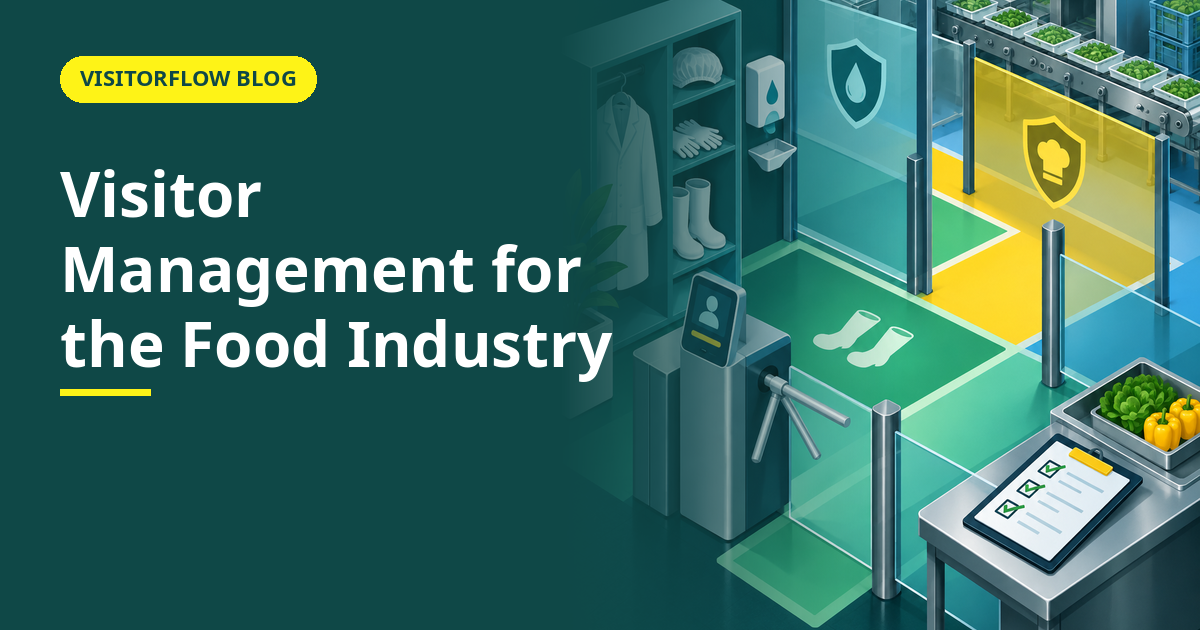
A food plant is not one space but a ladder of hygiene zones: low care (dispatch, utilities), medium care (packing), high care and high risk (processing, exposed product). The visitor rules tighten with each rung. Low care wants a log and a host. High care wants a current health declaration (no fever, no gastro illness, no open wounds), jewellery and personal-effects restrictions, PPE issue, and a record that ties all of it to the specific visit and zone. The failure mode of paper is not that the rules do not exist; it is that the evidence of the rules lives in three places that never reconcile.
The declaration has a shelf life problem too: a quarterly-signed health questionnaire says nothing about this morning's fever. The audit-grade pattern is a declaration signed per visit, on the day, before zone entry, with the visitor's own hand (or finger) on it.
Key idea: In a food plant the visitor record is a food-safety record; auditors read it with the same eyes they use for CCP logs, and they fail it with the same pen.
Register plus forms vs gate PC vs a VMS
Many plants run a register at security plus a questionnaire folder at QA; some have moved the register to a gate PC spreadsheet. The comparison shows where each lands when the auditor reconciles them.
| Audit question | Register plus forms | Gate PC spreadsheet | VisitorFlow (VMS) |
|---|---|---|---|
| Health declaration per visit, on the day | Quarterly form, often stale | Tick box in a column | Signed per visit at check-in, timestamped |
| Zone-specific visitor history | One book, no zones | Zone column, entered inconsistently | Zones enforced by visit type and badge |
| Reconcile visitor log with declarations | Two artifacts, one finding | One file, weak evidence | One record per visit, nothing to reconcile |
| Contractor hygiene compliance over time | Folder archaeology | Searchable but self-reported | Per-person history with expiry alerts |
One visit, one hygiene record
VisitorFlow binds declarations, zones, PPE and timestamps into a single visit record your auditor can sample in minutes.
Explore Visitor ManagementThe food plant visitor flow
Step 01
Pre-register with the zone in mind
The host raises the visit with the zones required; the invite tells the visitor what the plant expects (health declaration, no jewellery, PPE provided). Surprises at the gate are how queues and shortcuts both start.
Step 02
Check-in signs today's declaration
The health questionnaire, jewellery and personal-effects acknowledgment, and the hygiene briefing are signed on the check-in screen, timestamped to the minute. A visitor who cannot sign truthfully does not enter the zone; the system holds the line so the host does not have to.
Step 03
The badge says where they may go
The printed badge carries name, photo, host and zone. On the floor, anyone can see a badge that does not belong in high care; the badge does the reminding so the hygiene rule does not depend on memory.
Step 04
Exit closes a complete record
Badge and PPE returned, exit scanned, visit closed. The auditor's sample pulls one visit and gets everything: approval, declaration, briefing, zone, times, host. Nothing to reconcile, nothing to apologise for.
Audit readiness: BRCGS, FSSC and FSSAI
The audit frameworks converge on the same visitor evidence: controlled access to production zones, health screening of visitors and contractors, and records that prove both run every day. BRCGS clauses on site security and visitor control, FSSC 22000's PRP requirements, and FSSAI inspection checklists all read the visitor log as a food-safety artifact. The plants that pass cleanly share a pattern: the record is produced by the process, not reconstructed for the audit.
A note on the badge itself: the lanyard and badge that cross zones carry their own contamination question, and many plants now issue single-use badges for high care and sanitise reusable ones. The visitor system should track badge issue and return so the hygiene loop closes on the artifact, not just the person.
Reader Q&A
Our contractors visit daily. A fresh declaration every day?
For high-care zones, yes: the declaration's whole point is today's health. Make it a thirty-second screen at check-in and daily signers stop noticing it; make it a quarterly form and auditors stop believing it.
How do we handle a visitor who declares a symptom?
The system routes them: low-care meeting rooms remain open with the host informed, high-care entry is blocked with a polite scripted reason. The awkward conversation becomes a rule the screen states, which is easier for everyone.
Does the system record PPE issue?
Yes, as part of the visit record: what was issued, when it was returned. Plants that charge for unreturned PPE find the charging disputes vanish once the record is shared at exit.
Can declarations be customised per zone?
They should be. High care wants the full health questionnaire; low care may want only a hygiene acknowledgment; the allergen-handling area may add a specific question. Per-zone declaration templates keep each screen short and each audit answerable.
What about driver and tanker hygiene at intake?
Tanker drivers get their own fast flow: appointment-linked check-in, vehicle and seal recording, and the intake-area rules acknowledged on screen. Their record ties to the consignment, which is what the intake QC report needs.
How quickly can we be audit-ready from paper?
Most plants go live in two to three weeks: zones and declaration templates in week one, gate and host training in week two, and the first clean internal sample audit by week three. The audit after that is a demonstration.
Bottom line
This week, reconcile one month of your visitor register against your health declaration file, name by name. The mismatch count is your next audit finding, delivered early and privately; fix the process before the auditor finds the same count.
This quarter, move declarations to per-visit signing, badges to zone printing, and the log to one record per visit. The metric to watch is register-declaration mismatch; when it is zero by construction, the food-safety audit reads your visitor log as a strength.
Hygiene records that reconcile themselves
VisitorFlow runs visitor, contractor and evacuation workflows on one cloud platform, with per-visit declarations and zone control built for food plants.
Explore Visitor Management See Material Gate Pass Software Book a Free Demo
Aadeshwar Modi is a marketing technical content writer who loves writing on technology and AI topics.
- From Register Book to Software: Digitizing the Gate Pass
- Inter-Branch Transfer Gate Pass: Keep Stock True Across Units
- Material Inward Gate Pass: Link the Gate with the GRN
- E-Way Bill vs Gate Pass: What Each Document Does
- Gate Pass System for Engineering and Fabrication Workshops
- Gate Pass Software for Pharma and Chemical Plants
- Office Facility Maintenance Checklist: Daily, Weekly, Monthly
- Breakdown Maintenance Log: Record, Analyze, Reduce
- Maintenance KPIs and Dashboards: What to Review Weekly
- AMC Management Software: Contracts, Renewals and Vendor SLAs