Gate Pass Approval Workflow: Design a Chain That Holds
Published on 10/21/2026 • Updated on 10/22/2026
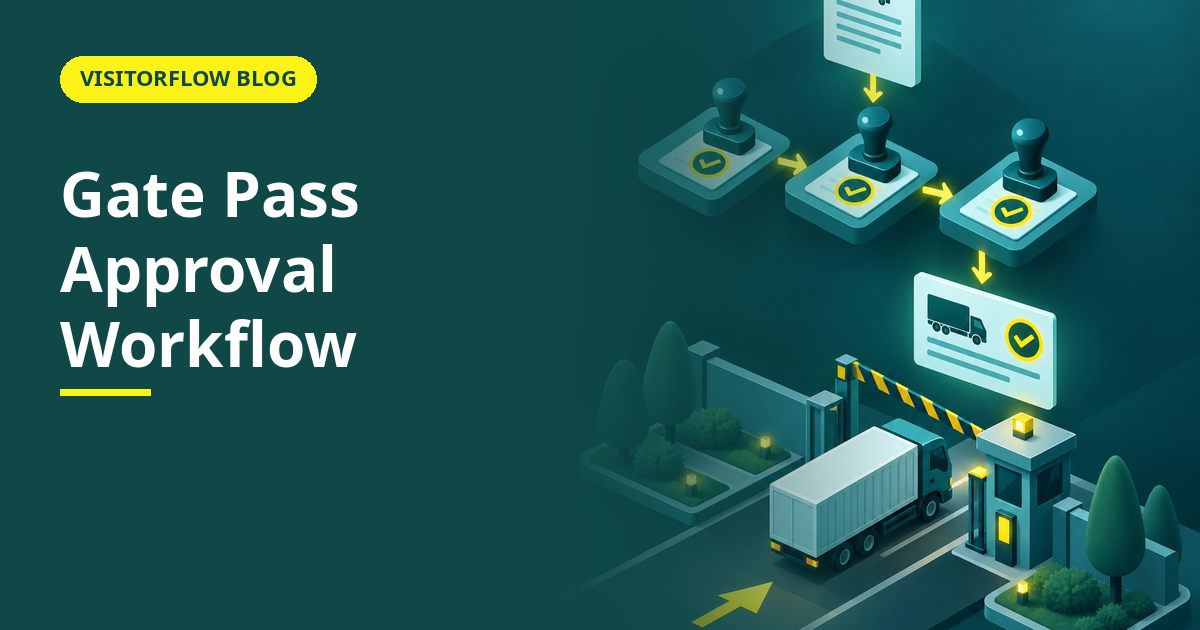
A mid-size auto components plant in Hosur has a rule: every material gate pass needs the stores manager's signature. The stores manager attends meetings, visits vendors and occasionally takes leave, so the rule has evolved a shadow system: pre-signed blank pass books in the security cabin, a peon who "gets it signed later", and a WhatsApp photo of a pass sent to the manager's phone that gets a thumbs-up reply nobody can produce in an audit. The control exists on paper and has dissolved in practice, which is worse than having no control, because everyone believes it is working.
The approval is the whole point of a gate pass; the rest is data entry. This guide walks through designing a gate pass approval workflow that actually holds: who approves what, how value thresholds and categories change the chain, what happens when the approver is unavailable, and how digital routing removes the shadow system. For the pass types themselves, our guide to the digital gate pass system covers the framework; this article is about the approval chain that guards them.
On this page
Why approval chains dissolve in practice
Paper approval chains fail for structural reasons, not moral ones. The approver is a bottleneck: one signature guards every movement, and production pressure finds ways around a bottleneck. The signature is unverifiable at the gate: security cannot tell a real signature from a practiced one, and rarely tries. The timing is unprovable: a pass signed at 6 PM for material that left at 2 PM looks identical to one signed before dispatch. And the chain is invisible: nobody can answer "who approved the passes that left last month" without a day of register archaeology.
The predictable endpoint is the shadow system: pre-signed books, retrospective signatures, and verbal approvals that become disputes. The fix is not more vigilance; it is redesigning the chain so that following it is faster than bypassing it. That means routing by category and value, a hard maker-checker split, and an approver who can approve from their phone in the time it takes the vehicle to reach the gate.
Key idea: An approval chain people bypass is not a control problem, it is a design problem; the chain that survives is the one where the legitimate path is the fastest path.
There is also an information problem hiding inside the authority problem. The approver signing a paper pass sees a form; they do not see that this vendor has three overdue job-work returns, that this employee already has two laptops out, or that this scrap category moved twice this week. Every signature is made on partial information, and the register that holds the rest of the picture is in a different building.
And one more quiet failure: the chain does not degrade gracefully. When the single named approver is unavailable, the whole system does not slow down; it forks into the shadow system, which then competes with the real one until nobody remembers which is which.
Designing the chain by category and value
Not every movement deserves the same scrutiny, and treating them alike is what creates the bottleneck. A workable design routes by two axes: what is moving, and what it is worth. A practical starting matrix:
| Movement type | First approver | Escalates when |
|---|---|---|
| Returnable (tools, fixtures, samples) | Department head | Value above threshold, or return date beyond 30 days |
| Job work (delivery challan) | Production head | New vendor, or value above threshold adds finance |
| Scrap sale | Stores head | Always adds finance; high-value categories add works head |
| Finished goods dispatch | Dispatch head | Invoice mismatch or credit hold adds finance |
| Employee material (laptops, instruments) | Reporting manager | Non-return by due date escalates to HR and IT |
Two design rules make the matrix work. First, thresholds must be real numbers in writing, not "high value": a pass that computes its own value from the line items can route itself, which is the entire point. Second, every category needs a named owner who feels the loss; scrap belongs to stores and finance, job work to production, employee material to the manager whose budget bought it.
Tune the matrix with your own incident history before rolling it out. Pull the last year of gate disputes, stock discrepancies and audit findings, and ask which cell of the matrix each one belonged to. The categories that generated incidents earn tighter chains; the categories with a clean record earn lighter ones. A matrix built from your own history is defended easily in front of both the auditor and the floor, because every row has a story behind it.
Maker-checker and the unavailable approver
The maker-checker split is the one non-negotiable: the person who prepares the pass never approves it, and the system enforces the split rather than trusting it. Everything else is design. The unavailable approver deserves a designed answer, because "manager was in a meeting" is the origin story of every pre-signed book. The answers that work:
- A named delegate per approver, active automatically when the primary does not respond within a set window (fifteen minutes for dispatch, an hour for the rest).
- Phone-based approval as the default path, so the approver in a meeting approves between agenda items in under a minute.
- A genuine emergency route: the works head can release a pass on an emergency flag, and every emergency pass lands on the next day's review list. Emergencies that survive daylight stay rare.
- No pre-approval of blanks, ever. The system that cannot issue an unsigned pass cannot develop the habit.
How digital routing changes the game
Digital passes attack each failure mode of paper directly. The bottleneck dissolves because approval happens on a phone from anywhere, and the delegate rule fires automatically. The signature problem disappears because approval is a logged-in action with a timestamp, not ink. The timing question answers itself: the approval time is before the exit scan, or the pass never reached the gate. And the invisibility problem becomes a report: passes by approver, approval turnaround time, emergency flags, and passes by category and value, all exportable for the audit.
The approver's screen carries the context paper never could: the pass itself, the preparer's history, this vendor's open returns, this employee's outstanding items, and the photos of the staged consignment. Approval stops being a signature on a form and becomes a thirty-second review of everything that matters about this movement.
The behavioural change is the real win. When the legitimate path is "raise pass, phone buzzes, approve, vehicle leaves", the shadow system has no reason to exist. The Hosur plant's pre-signed books did not survive two weeks of a one-minute approval path, because the workaround was more work than the rule. Our guide to the digital gate pass system covers the gate-side mechanics; our scrap gate pass guide shows the same approval design applied to the leakiest category.
Approvals in a minute, not a meeting
VisitorFlow routes every gate pass through the right chain by category and value, with phone approvals, automatic delegates and a full audit trail.
Explore Material Gate Pass SoftwareReader Q&A
How many approval levels is too many?
Two for almost everything, three only for genuinely high-value movements. Every level above two multiplies delay and teaches the floor to route around the chain. If a third signature adds no information, it adds only bypass.
Should security ever approve a pass?
No. Security verifies: they match the load, vehicle and photo against an already-approved pass. Making security an approver mixes the checker into the chain they are checking, and guarantees the gate stops trusting passes.
What stops an approver from rubber-stamping everything?
The monthly approver report: turnaround time, passes approved, and the one metric that changes behaviour, disputes or discrepancies on their passes. Approving in eleven seconds without opening the pass is visible, and visibility is the control.
How do we handle approvals across shifts?
Approval authority follows the role, not the person: the night-shift delegate holds the same chain for their shift. Phone approval covers the rest, because the day approver can clear a night dispatch from home in a minute when it matters.
Can approvers see the photo before approving?
Yes, and for high-value categories they should have to. The pattern that works: the preparer attaches a photo of the staged consignment, the approver sees it in the approval screen, and the gate adds its own photo at exit. Two photos, two moments, one chain of custody.
How do we migrate a plant that runs on pre-signed books?
Pick one category (usually returnable passes), run it digital for two weeks with the one-minute approval path, and let the floor discover the legitimate route is faster. Then extend by category and withdraw the paper books on a published date. The books die from disuse, not decree.
Bottom line
This week, stand at the gate for an hour and ask how each pass got signed. Every thumbs-up photo, pre-signed book and "will get it signed" is a designed failure announcing itself; count them.
This quarter, write the category-and-value matrix, enforce maker-checker, name the delegates, and put approval on phones. The metric to watch is approval turnaround time alongside the emergency-flag count; when the first is under five minutes, the second approaches zero, and the chain is real again.
Retire the pre-signed book
VisitorFlow runs digital material, visitor, vehicle and returnable gate passes on one cloud platform, with approval chains that hold up in audits.
Explore Material Gate Pass Software See Visitor Management Book a Free Demo
Ed Jhonson is a Sourcing & Marketing Expert who writes content related to Technology and Engineering topics.
- From Register Book to Software: Digitizing the Gate Pass
- Inter-Branch Transfer Gate Pass: Keep Stock True Across Units
- Material Inward Gate Pass: Link the Gate with the GRN
- E-Way Bill vs Gate Pass: What Each Document Does
- Gate Pass System for Engineering and Fabrication Workshops
- Gate Pass Software for Pharma and Chemical Plants
- Office Facility Maintenance Checklist: Daily, Weekly, Monthly
- Breakdown Maintenance Log: Record, Analyze, Reduce
- Maintenance KPIs and Dashboards: What to Review Weekly
- AMC Management Software: Contracts, Renewals and Vendor SLAs