Near-Miss Reporting: Definition, Examples and a Simple System
Published on 10/18/2026 • Updated on 10/23/2026
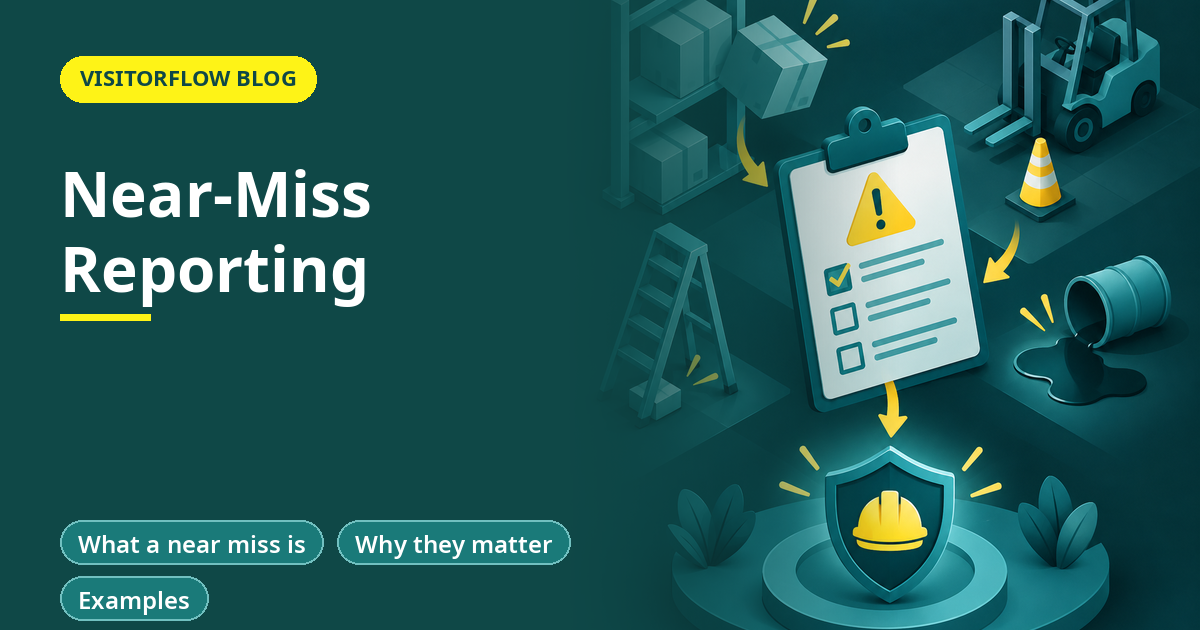
A forklift reverses past a packer who has stepped out from behind a pallet. The driver brakes in time. The packer laughs it off. Both go back to work. That evening nobody remembers it. Next month the same corner, a different driver and a different packer, and this time the brakes are late.
The first event was a near miss. It cost nothing, and it carried a free warning. A near miss reporting system collects these warnings and turns them into fixes before someone gets hurt. This guide defines a near miss, gives examples, sets out a simple system and shows how to build the habit of reporting. The examples are assumed, for illustration.
On this page
- What a near miss is
- Why they matter
- Examples
- A simple reporting system
- A near-miss card
- Building the habit
- Rating the potential
- What managers and supervisors do
- Near misses outside the factory
- Using the numbers
- A worked example
- Common mistakes
- A 30-day launch
- Five-minute self-check
- Reader Q&A
- Bottom line
What a near miss is
A near miss is an unplanned event that did not cause injury, illness or damage, but could have. Some safety bodies use the term close call or near hit. The idea is the same: the outcome was luck, not design.
Key idea: The same hazard that gave a near miss today can cause an injury tomorrow. The only difference is luck.
Why they matter
Safety practitioners often describe a pyramid, with many minor events at the base and few serious injuries at the top. The exact ratios are debated and vary by site, so treat them as a picture and not a rule. The lesson holds: for every serious event there were many warnings, and the cheapest time to fix a hazard is at the warning.
- Near misses show hazards before anyone is hurt.
- They are numerous, so they give you data fast.
- Reporting them costs nothing in injury or lost time.
- They show whether people trust the system enough to speak up.
Examples
| Place | Near miss |
|---|---|
| Factory | Operator reaches into a running machine and pulls back as the guard closes |
| Warehouse | Pallet slips off the forks and lands beside a picker |
| Office | Cable across a corridor causes a stumble, no fall |
| Gate | Truck reverses toward a guard who steps aside in time |
| Maintenance | Wrong breaker switched off, noticed before work began |
| Kitchen or canteen | Hot oil splash, no burn |
Each one is the kind of event that is forgotten by evening unless there is a simple way to record it on the spot.
A simple reporting system
Step 01
Make it easy
A one-line form, a QR code on a poster or a box at the gate. Under one minute.
Step 02
Accept all
Take every report, even small or unclear ones. Sort later.
Step 03
Review fast
The safety officer reads new reports within a day.
Step 04
Act and tell
Fix what can be fixed and tell the reporter what was done.
Step 05
Count and learn
Review counts by area and cause each month.
Our guide on the incident report format has a fuller form. For near misses, a short card is enough.
A near-miss card
The name is optional on purpose. It lowers the barrier to the first report. As trust grows, more people sign.
Make near-miss reporting a one-minute job
VisitorFlow Incident Management lets anyone report a near miss from a phone and tracks the fix.
See Incident Management SoftwareBuilding the habit
- Never punish a person for reporting a near miss.
- Thank every reporter, in person or on the board.
- Show fixes on a notice board: you reported, we fixed.
- Start with managers reporting their own near misses.
- Count reports as a good sign, not a bad one, and say so to the whole team. A rising count early means more speaking up.
The culture takes months. The main ingredient is visible follow-through. One reported hazard that is fixed in a week does more than a poster.
Rating the potential
Not every near miss deserves the same effort. Rate each by what could have happened, not by what did.
| Potential | Meaning | Response |
|---|---|---|
| High | Could have caused death or serious injury | Investigate fully, act within days |
| Medium | Could have caused lost-time injury | Short review, act within weeks |
| Low | Minor injury or damage possible | Log, fix when convenient |
A pallet that falls beside a picker is high potential. A stumble over a cable is usually low. Use the rating to focus your time.
What managers and supervisors do
Supervisors are the ones who hear about near misses first and decide whether they get reported. If a supervisor shrugs, the event vanishes. Ask each supervisor to bring one near miss to the weekly toolbox talk and to write the card with the team. Managers should read the monthly count, visit one fix on the floor and thank the team that raised it. Visible interest from the top is what makes the system real.
Near misses outside the factory
Near miss reporting is not only for plants. Offices, campuses, hospitals and warehouses have their own: a wet floor near the entrance, a loose stair tread, a server room door left open, a visitor who wandered into a restricted area before the guard noticed. The same card and the same quick review work. At a gate or reception, a visitor who enters without a pass and is stopped in time is a security near miss, and worth a line in the log.
Using the numbers
Each month, count reports by area, type and cause. Look for clusters. If four near misses involve forklift and foot traffic in one aisle, that aisle needs a layout fix, not another reminder. Track the time between report and fix, and the share of reports closed. Aim for fast fixes on the top risks and a short list of open items, with an owner for each.
A worked example
The numbers are invented. Reports rose first and the hazard fell after, which is the pattern to expect.
Common mistakes
Blaming the reporter
One reprimand stops reports for months.
No feedback
If nothing visibly changes, reports dry up.
Make it a minute
A long form kills reporting.
Another mistake is setting a target for fewer near miss reports. That teaches people to stop reporting. Set a target for fixes closed on time instead.
A third is treating a near miss as less serious than an injury when the potential was high. Rate each by what could have happened, and give high-potential ones a full investigation.
A 30-day launch
Start reporting on one site.
Step 01
Week 1: card and poster
Print the card and a QR poster.
Step 02
Week 2: brief
Tell every team why and promise no blame.
Step 03
Weeks 3 and 4: review and fix
Review each report in a day and show the first fixes on a board.
Hold a monthly count and share it. At the end of the first month, ask three people from different shifts what made reporting easy or hard and change one thing based on their answers. Small changes, such as moving the box to where people actually pass or shortening the card by one line, often lift the number of reports more than a new campaign does.
Five-minute self-check
Check your near-miss system against these points.
Answer yes or no
- ☐ Can anyone report in under a minute?
- ☐ Is every report reviewed within a day?
- ☐ Do reporters see what was fixed?
- ☐ Is blame kept out of reporting?
- ☐ Do you count fixes closed on time?
Two or more no answers mean this is worth fixing before anything else on your list.
Reader Q&A
What is a near miss?
An unplanned event that did not cause injury, illness or damage, but could have. The outcome was luck.
Why should near misses be reported?
They are free warnings. Fixing the hazard at that point prevents the injury that luck avoided.
How do I start a reporting system?
Make a one-minute card or QR form, accept every report, review it within a day, fix and tell the reporter.
Should near miss reports be anonymous?
Allow it at first. Names are optional, and more people sign as trust grows.
How many reports should I expect?
A rising count in the first months is a good sign. Judge the system by fixes closed on time, not by a low count.
Is a near miss the same as an incident?
A near miss is a kind of event with no harm. An incident is a wider term. See our guide on near miss, incident and accident.
Bottom line
Near misses are free lessons. A simple card, a quick review and visible fixes turn them into prevention.
Start with one card, one board and a monthly count, and thank every reporter. Then keep going, month after month. A system that runs for a year, with fixes shown on a board, changes how a workplace thinks about risk.
Capture warnings before they hurt
VisitorFlow runs visitor, material gate pass, courier, maintenance and incident workflows on one cloud platform.
See Incident Management Software See Material Gate Pass Software Book a Free Demo
Aadeshwar Modi is a marketing technical content writer who loves writing on technology and AI topics.
- From Register Book to Software: Digitizing the Gate Pass
- Inter-Branch Transfer Gate Pass: Keep Stock True Across Units
- Material Inward Gate Pass: Link the Gate with the GRN
- E-Way Bill vs Gate Pass: What Each Document Does
- Gate Pass System for Engineering and Fabrication Workshops
- Gate Pass Software for Pharma and Chemical Plants
- Office Facility Maintenance Checklist: Daily, Weekly, Monthly
- Breakdown Maintenance Log: Record, Analyze, Reduce
- Maintenance KPIs and Dashboards: What to Review Weekly
- AMC Management Software: Contracts, Renewals and Vendor SLAs