Preventive Maintenance Software for CNC and Machining Shops
Published on 10/21/2026 • Updated on 10/23/2026
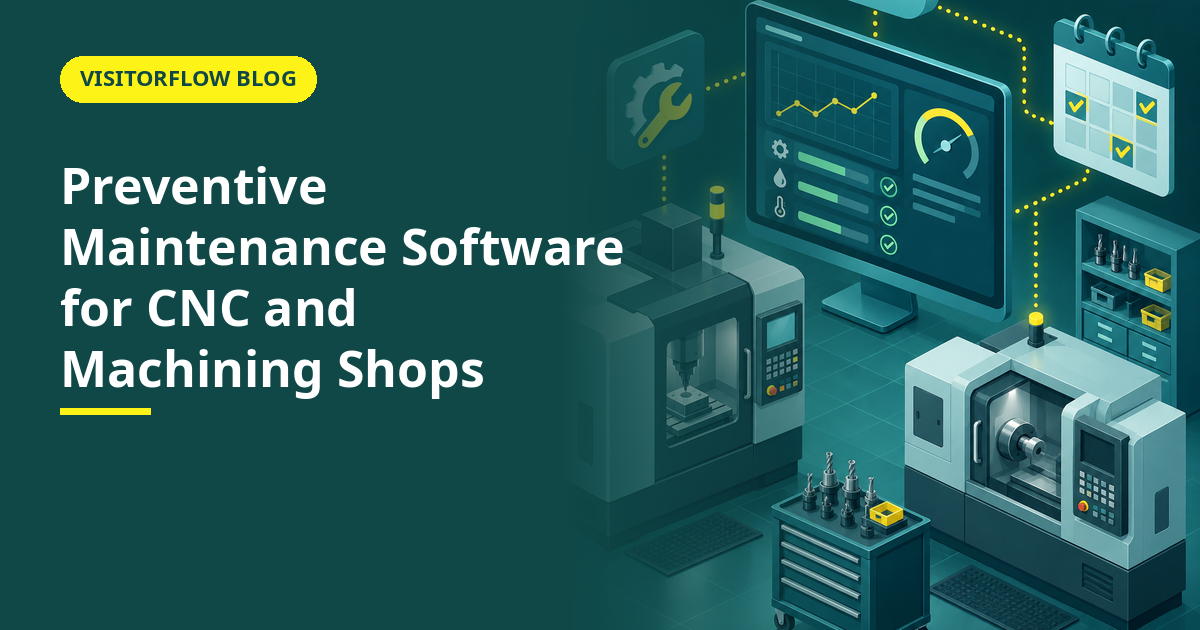
A VMC spindle starts sounding rough on a Tuesday. The operator mentions it; the setter says he will listen after the current job; the job runs to Saturday. On Sunday the spindle seizes mid-cut, the job is scrap, the replacement bearing assembly is three weeks away, and the machine that was supposed to ship on the tenth is now a very expensive coat stand. CNC shops live closer to this story than most industries, because their entire revenue passes through a handful of spindles, ballscrews and guideways.
Preventive maintenance software exists to move that story from breakdown-and-scramble to schedule-and-check. This article covers why CNC shops need a different flavour of maintenance discipline, how scheduled PM compares with run-to-failure, how to build a realistic machine-wise schedule, and what changes on the shop floor once it runs. Our article on preventive maintenance software covers the general system; this one is about the machining shop's version of it.
On this page
Why CNC maintenance is a different discipline
Three things separate machining maintenance from general facility upkeep. First, concentration: a shop's output flows through a few machines, so one down machine is not a percentage of capacity, it is a late order. Second, precision: wear shows up as quality drift before it shows up as failure, so the "breakdown" often begins as scrapped parts and a customer complaint. Third, lead time: spindles, ballscrews and encoders are not hardware-store items, so an unplanned failure carries weeks of waiting that a planned replacement would have absorbed into a weekend.
This is why the wall calendar fails. A CNC shop's PM needs to be machine-wise, running-hour-aware where possible, and tied to actual checklists: lubrication schedules, backlash checks, coolant concentration, filter changes, axis alignment. The shops that do this well treat the PM schedule with the same respect as the production schedule, because in the end they are the same schedule.
Scheduled PM vs run-to-failure compared
| What a CNC shop cares about | Run to failure | Calendar on the wall | PM software with machine-wise schedules |
|---|---|---|---|
| Downtime lands when you choose | It chooses, usually mid-order | If someone checks the calendar | Auto-raised PM tickets, planned into low-load days |
| Spares arrive before they are needed | Ordered after the failure, air-freighted at best | Sometimes guessed ahead | Failure history tells you what to stock |
| Quality drift caught early | Found at inspection, after the scrap | Depends on the operator's ear | Checklist items catch drift on schedule |
| Proof for customer audits | None | A calendar with ticks, maybe | Timestamped PM history per machine, exported to Excel |
5x to 10x
is the typical cost multiplier of reactive repair over planned maintenance cited in US Department of Energy guidance on operations and maintenance. On a CNC spindle, the multiplier is higher because the scrap and the late order join the bill.
PM that runs itself, machine by machine
VisitorFlow auto-raises preventive maintenance tickets on your schedule, with checklists, photos and a full history per machine that exports to Excel for customer audits.
Explore Maintenance Helpdesk SoftwareBuilding a machine-wise PM schedule in four steps
Step 01
List machines by revenue at risk, not by age
The oldest machine is not always the riskiest. Rank by what stops shipping if the machine stops: the VMC running your biggest customer's part outranks the newer machine doing overflow work.
Step 02
Write the checklist from the OEM manual, then your scars
Start with the manufacturer's daily, weekly and monthly items, then add the failures your shop has actually suffered. Your breakdown history is a customisation layer no manual has.
Step 03
Schedule PM into production, not around it
Auto-raised tickets land on known low-load windows: changeover days, second-shift gaps, Sundays. PM that fights the production schedule loses; PM planned inside it happens.
Step 04
Review the failure log against the schedule monthly
Any breakdown on a machine whose PM was current means the checklist missed something; add the item. The schedule is a living document that your own failures keep correcting.
What changes on the shop floor
The visible change is small: a PM ticket appears, the technician works the checklist with photos, and the machine goes back to cutting. The invisible change is larger. The setter stops being the maintenance department's memory. The owner stops learning about machine health from customer complaints. And the next customer audit stops being a week of preparing evidence, because the evidence generated itself all year.
One more thing changes, and it is the one that pays: buying decisions. Two years of per-machine repair history tells you which machine is costing its keep and which is eating it, in Excel, with timestamps. The replacement conversation moves from "I think this machine is tired" to "here is what tired costs us per quarter".
Reader Q&A
What should a CNC machine PM checklist include?
Start from the OEM manual: lubrication, coolant concentration and level, filter and chip-tray cleaning, way-cover inspection, backlash checks at defined intervals. Then add every failure your shop has actually had, because that is the list written by your machines.
How often should a VMC get preventive maintenance?
Daily operator checks, weekly cleaning and lubrication checks, monthly deeper inspection, and annual alignment and geometry checks is the common pattern. Adjust from your own breakdown history and the OEM schedule; running hours matter more than calendar age for high-utilisation machines.
Is PM software worth it for a shop with five machines?
Arguably more than for a large plant. With five machines, one seizure is twenty percent of capacity gone for weeks. The software costs a fraction of one emergency spindle repair, and the audit-ready history helps win customers.
Can the operator handle daily checks, or does it need a technician?
Daily checks belong with the operator: coolant, oil levels, unusual sounds, chip buildup. The ticket system works because anyone can report with a photo; the deeper weekly and monthly items go to the technician with a checklist.
How does PM history help in customer audits?
Automotive and aerospace customers audit process discipline, and maintenance records are a standard ask. A timestamped, machine-wise PM history exported to Excel answers in minutes what a paper system answers in days of file-digging.
What is the first sign a shop needs PM software?
The same machine failing twice for the same reason, or a delivery slip traced back to an unplanned stoppage. Both mean the schedule lives in someone's head, and heads go on leave.
Does preventive maintenance reduce scrap?
Indirectly but reliably: worn guideways, tired spindles and backlash produce dimensional drift, and drift produces scrap before it produces failure. Checklist items that catch drift early remove that whole category of surprise.
Bottom line
This week, list your machines by revenue at risk and write down the last three breakdowns each one had, from memory. If the list is hard to reconstruct, that difficulty is the problem statement.
This quarter, put the top three machines on an auto-scheduled PM routine with real checklists. The metric to watch is unplanned downtime hours per month; when it trends down for two quarters, the schedule has become an asset.
Machines maintained on schedule, not on luck
VisitorFlow runs visitor, material gate pass, courier, maintenance and incident workflows on one cloud platform, with preventive schedules and breakdown tickets in one register.
Explore Maintenance Helpdesk Software See Material Gate Pass Software Book a Free Demo
Aadeshwar Modi is a marketing technical content writer who loves writing on technology and AI topics.
- From Register Book to Software: Digitizing the Gate Pass
- Inter-Branch Transfer Gate Pass: Keep Stock True Across Units
- Material Inward Gate Pass: Link the Gate with the GRN
- E-Way Bill vs Gate Pass: What Each Document Does
- Gate Pass System for Engineering and Fabrication Workshops
- Gate Pass Software for Pharma and Chemical Plants
- Office Facility Maintenance Checklist: Daily, Weekly, Monthly
- Breakdown Maintenance Log: Record, Analyze, Reduce
- Maintenance KPIs and Dashboards: What to Review Weekly
- AMC Management Software: Contracts, Renewals and Vendor SLAs