Returnable Gate Pass (RGP): Meaning, Format and Process
Published on 10/18/2026 • Updated on 10/23/2026
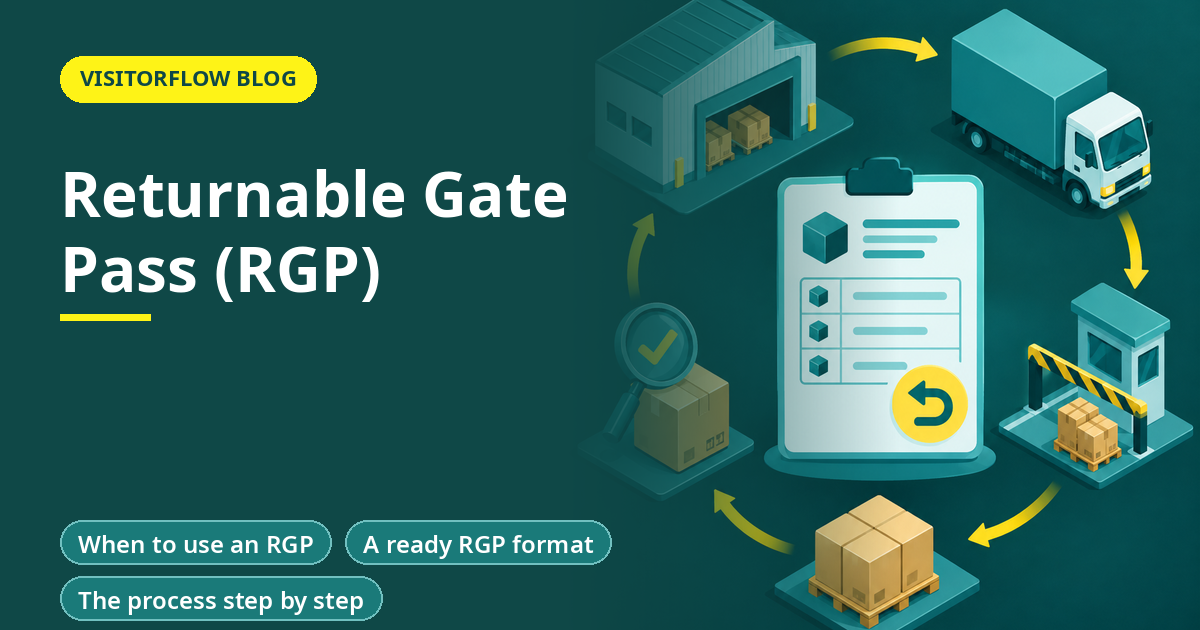
A pump goes out for repair, a laptop goes to a client for a demo, a mould goes to a vendor for polishing. Each is expected back. If nobody records it properly, each can vanish for years. The returnable gate pass, or RGP, exists to stop that.
This guide explains what an RGP is, when to use it, what the format should contain, how the process runs from request to return, and how to chase items that do not come back. It uses plain examples from Indian factories and warehouses.
On this page
- What a returnable gate pass is
- When to use an RGP
- A ready RGP format
- The process step by step
- Chasing overdue items
- Value, approval limits and insurance
- Agreements with the receiving party
- Keeping the open list
- A note on GST and challans
- A worked example
- Common mistakes
- A one-week start
- Five-minute self-check
- Reader Q&A
- Bottom line
What a returnable gate pass is
A returnable gate pass is a gate pass for goods that leave the site with a promise to return. The pass states the item, the reason, the receiver and an expected return date. The pass stays open until the item is back and checked in.
Key idea: An RGP is a loan record, not just an exit slip. It is closed only when the item returns.
When to use an RGP
| Situation | RGP? |
|---|---|
| Equipment sent for repair or calibration | Yes |
| Tools lent to a contractor | Yes |
| Samples sent to a customer for trial | Yes |
| Moulds and dies sent to a vendor | Yes |
| Scrap sold to a buyer | No, use a non-returnable pass |
| Finished goods dispatched on invoice | No, use the invoice and challan |
If there is any doubt whether an item will return, use a non-returnable pass and record the sale or write-off. A returnable pass with no real intention to return only hides a loss.
A ready RGP format
The lower block, for the return, is what makes the pass an RGP. Many plants forget it and then have no record of what came back.
The process step by step
Step 01
Raise the pass
The requester fills in items, reason, party and expected return date.
Step 02
Approve
The department head signs. Higher value items may need a second signature.
Step 03
Gate check out
The guard checks items against the pass, notes the time and gives the party their copy.
Step 04
Track
The store or maintenance team keeps an open list with return dates.
Step 05
Gate check in
On return, the guard records the date and condition and the pass is closed.
The tracking step is where most plants fail. A weekly review of the open list takes minutes and recovers a lot.
Stop returnables from going missing
VisitorFlow Material Gate Pass keeps every open RGP in one list and flags items past their return date.
See Material Gate Pass SoftwareChasing overdue items
Set a standard period for each reason, for example repair ten days, calibration seven days, trial fifteen days. Anything beyond that is overdue.
- Day 1 after due: the store calls the party.
- Day 7: the department head follows up in writing.
- Day 15: purchase or commercial head escalates.
- Day 30: decide whether to write off or claim, with approval.
Write the ladder down. People chase when they know it is expected of them.
Value, approval limits and insurance
Not every item deserves the same level of control. Set value bands, for example under Rs 10,000 approved by the department head, Rs 10,000 to Rs 1 lakh with the plant head as second signer, and above that with finance as well. Write the bands on the pass book cover so the guard knows when a second signature is missing.
For high value items such as calibrated instruments or moulds, record the serial number and take a photograph before it leaves. Ask whether your insurance covers items at a vendor's premises, since many policies cover only the insured site.
Agreements with the receiving party
A pass on its own is not an agreement. For regular repair vendors, keep a short letter that states who owns the item, that it must be returned in the same condition, the time allowed and who bears the cost of loss or damage. Ask the vendor's representative to sign the pass copy on receipt, with name and phone number, so that you can show who took custody.
When the vendor returns the item, compare it with the photograph and the serial number. Note any damage on the pass and have the driver sign it before he leaves.
Keeping the open list
A paper register works if it is ruled with the right columns. A spreadsheet works better because it can be sorted by due date.
| Column | Purpose |
|---|---|
| RGP number | Link to the pass |
| Item and serial | Identify the asset |
| Party and phone | Know whom to call |
| Date out and due | Calculate overdue days |
| Status | Open, returned, written off |
| Owner | The person who chases it |
Name an owner for every line. A list with no owners is a list that nobody reads. Add a column for remarks as well, such as promised dates from the vendor, so the next person to chase does not start from zero.
A note on GST and challans
Moving goods for job work or repair may need a delivery challan under GST rules. The gate pass is an internal control and does not replace the challan. Ask your accountant which documents each movement needs. Our guide on delivery challan versus gate pass covers the difference.
A worked example
The example is made up, but the pattern is common.
Common mistakes
No return date
Without a date nothing is overdue.
Closing without checking
Check quantity and condition on return.
Weekly review
Ten minutes a week catches most losses.
Another mistake is letting the receiver sign for goods without a name and phone number. Record who took it.
A third is using RGPs for items that will not return, which clutters the open list and hides the real overdue items.
A fourth is renewing an overdue pass by simply changing the date. Raise a fresh pass or note the extension with a reason and an approval, so that the history shows how long the item was really away.
A one-week start
Set up RGP control without new software.
Step 01
Day 1: format
Add the return block and expected date to your pass.
Step 02
Days 2 to 3: open list
List all items currently out, with dates.
Step 03
Days 4 to 5: ladder
Agree the chase ladder with department heads.
Review the list every Monday, and ask each owner for one line of status on every overdue item. Share the list with management once a month so they see what is outside the gates. Over a quarter, track how many items were returned on time, and use that number to judge whether the process is improving or whether some vendors need a firmer conversation.
Five-minute self-check
Check your RGP process against these points.
Answer yes or no
- ☐ Does every RGP carry a return date?
- ☐ Is there an open list?
- ☐ Is condition checked on return?
- ☐ Is there a chase ladder?
- ☐ Do you know what is out today?
Two or more no answers mean this is worth fixing before anything else on your list.
Reader Q&A
What is a returnable gate pass?
A gate pass for goods that leave a site and are expected back. It stays open until the goods return and are checked in.
What is the difference between RGP and NRGP?
An RGP is for items that will return. A non-returnable gate pass is for items that leave for good, such as sold or scrapped goods.
What should an RGP contain?
Pass number, date, item details, reason, receiver, vehicle, expected return date, approver and a return section.
Who approves an RGP?
The department or store head with authority over the item. Higher value items may need a second approval.
Do I need a delivery challan too?
Possibly. Goods sent for repair or job work may need a challan under GST. Ask your accountant.
How do I track overdue RGPs?
Keep an open list with return dates, review it weekly and follow a written chase ladder.
Bottom line
An RGP is a loan record. It works when it has a return date, an approver, a gate check at both ends and a weekly review of what is still out.
Add the return block to your format and start the open list this week. It is a small change that gives you an answer to the question every auditor asks, which is what is outside the gates right now.
Track every returnable item
VisitorFlow runs visitor, material gate pass, courier, maintenance and incident workflows on one cloud platform.
See Material Gate Pass Software Explore Visitor Management Software Book a Free Demo
Aadeshwar Modi is a marketing technical content writer who loves writing on technology and AI topics.
- From Register Book to Software: Digitizing the Gate Pass
- Inter-Branch Transfer Gate Pass: Keep Stock True Across Units
- Material Inward Gate Pass: Link the Gate with the GRN
- E-Way Bill vs Gate Pass: What Each Document Does
- Gate Pass System for Engineering and Fabrication Workshops
- Gate Pass Software for Pharma and Chemical Plants
- Office Facility Maintenance Checklist: Daily, Weekly, Monthly
- Breakdown Maintenance Log: Record, Analyze, Reduce
- Maintenance KPIs and Dashboards: What to Review Weekly
- AMC Management Software: Contracts, Renewals and Vendor SLAs