Textile Mill Maintenance Software: From Blow Room to Packing
Published on 10/21/2026 • Updated on 10/23/2026
A spinning mill in Coimbatore runs 40,000 spindles across three shifts. Ring frame 12 has been running 4% above its end-breakage norm for a week; the floor supervisor knows it, the doffers know it, and the maintenance fitter finds out when the traveller wear finally snaps a cop and the frame stops mid-shift with a delivery to a weaving unit due Thursday. The fitter had no way to know, because "running a bit rough" never made it off the floor.
This guide covers maintenance management for textile mills: the machinery mix from blow room to packing, why lint and humidity dominate the PM calendar, and how a ticketing habit carries the floor supervisor's "a bit rough" to the maintenance team before it becomes a stoppage. For the general maintenance workflow, our guide to the maintenance ticketing system covers the basics; this article is about the mill's specific machinery.
On this page
The machinery mix and what wears first
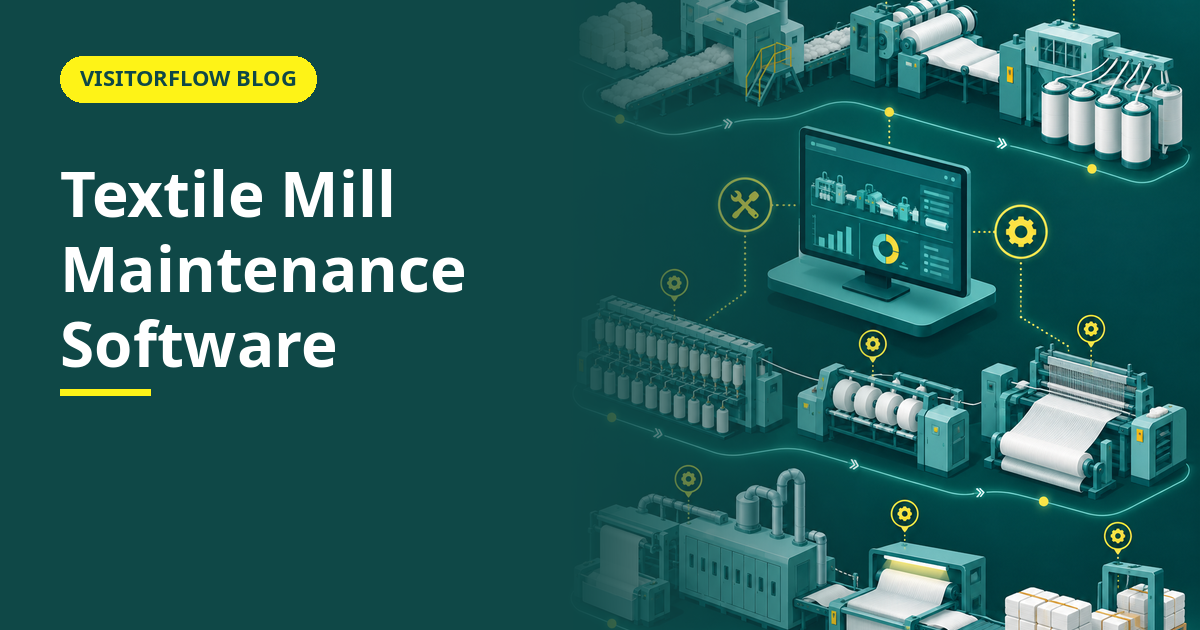
A composite mill's maintenance load is spread across a long process chain, and each stage fails differently. Blow room and carding machines eat trash and fibre; their beaters, licker-ins and card clothing wear by throughput. Draw frames, speed frames and ring frames wear cots, aprons, travellers and spindles on running hours. Winding, warping, sizing and weaving add their own consumables. And the humidification plant that keeps the whole line stable fails quietly and punishes every stage at once.
What this mix means for the maintenance system:
- Consumables drive the calendar. Cots, aprons, travellers and card clothing have known service lives in running hours, so PM triggers belong on hours, not months.
- Lint is a maintenance event, not housekeeping. Clogged filters and lint-loaded motors overheat; cleaning rounds are PM tasks with tickets, not informal sweeping.
- Humidification failure is plant-wide. One failed plant shows up as end breakages everywhere; it needs the highest-priority ticket category the mill has.
- The floor knows first. End-breakage creep, strange noise, vibration: the supervisor's observations are the earliest sensor the mill has, and they need a one-minute route to maintenance.
Key idea: A mill's cheapest maintenance information is the floor supervisor's daily observation; a ticketing system exists to make sure that observation is never lost between shifts.
Diary vs ERP module vs a ticketing system
Most mills run a maintenance diary in the fitter's room and a PM chart on the wall; composite units often have an ERP module that records purchases, not breakdowns. The comparison shows where each lands when the mill owner asks why utilisation slipped two points.
| What the mill needs | Diary and wall chart | ERP maintenance module | VisitorFlow Maintenance (ticketing) |
|---|---|---|---|
| Floor observation reaches maintenance | If the shift handover remembers it | Supervisor has no ERP access | One-minute ticket with photo from the floor |
| Consumable PM by running hours | Wall chart, updated when noticed | Calendar only | Hours-based triggers per asset group |
| Stoppage history per frame | Fitter's memory, retires with him | Stores history, not breakdowns | Every ticket closed against the asset |
| Spares stockout during breakdown | Discovered at the breakdown | Stock known, not linked to the job | Parts recorded on the ticket, consumption visible |
From "running rough" to a ticket in one minute
VisitorFlow Maintenance puts ticket raising on the floor supervisor's phone, with PM schedules by date or running hours.
Explore Maintenance SoftwareSetting it up in three moves
Move 01
Group assets the way the mill walks
Asset groups by stage and line: blow room line 1, carding 1 to 8, ring frames 1 to 20, winding, then utilities (humidification, compressors, boilers). The supervisor raises a ticket against the frame in two taps; the history accumulates per frame, not in a general pile.
Move 02
Make the daily round produce tickets
The supervisor's morning round already finds the rough frame, the lint-loaded motor and the dripping airline. Each finding becomes a one-minute ticket with a photo on the spot, instead of a verbal note that dies at the shift change.
Move 03
Let PM fire from running hours
Traveller changes, cot buffing, card clothing inspection and filter cleaning get hour-based triggers fed by the production sheet's running hours. The PM arrives as a ticket when the asset hits its hours, not when someone remembers the wall chart.
Lint, humidity and the PM calendar
The two forces that dominate a mill's PM calendar are lint and moisture. Lint loads motors, blocks filters and coats sensors on a rhythm set by the mix being run, so cleaning rounds and filter changes belong on short intervals with tickets that record completion. Humidity keeps yarn processable, so the humidification plant's nozzles, pumps and water treatment get weekly attention, and its failure gets the plant's only drop-everything priority class. Our guide to preventive maintenance software for CNC shops covers the same calendar-plus-meters pattern in a machining context.
The discipline that makes it stick: every ticket closes with what was done and which parts went in. Three months later, the mill can answer the questions a diary never could: which frames stop most, which consumable is being changed early "to be safe", and what the humidification plant actually costs to keep alive.
Reader Q&A
We have hundreds of frames. Do we register every one?
Register every frame, but manage them in groups. The ticket names the specific frame (two taps), and the reports roll up by group and stage, so you see "ring frames 1 to 20" trends without losing the single-frame history.
How do running hours get in without machine connections?
The production office already records running hours per frame on the shift sheet. A weekly entry into the asset record is enough; hour-based PM only needs the number, not a live sensor feed.
Will fitters actually close tickets with details?
Keep the close-out to three fields: what was done, which parts, one photo if useful. Under a minute. Mills that ask for essays get blank closes; mills that ask for three facts get usable history.
Does this handle contract maintenance for sizing or boilers?
Yes. AMC visits are scheduled PM tickets assigned to the vendor, and their visit report closes the ticket. The history answers whether the vendor has been coming as often as the contract says.
Can it help justify replacement capex?
That is one of its best uses. A frame with forty tickets and rising spares spend writes its own replacement case; a frame with six clean tickets defends itself. Capex meetings stop running on impressions.
What about the humidification plant getting top priority?
Set its ticket category to the highest escalation class with the shortest response target. When the plant dips, every frame suffers within hours, so its tickets should reach phones, not sit in a queue.
Bottom line
This week, ask three shift supervisors what they noticed on their rounds that maintenance never heard about. The list you get is the backlog your diary has been silently accumulating.
This quarter, register the asset groups, put the one-minute ticket on the supervisors' phones, and move consumable PM to running hours. The metric to watch is stoppages preceded by an unlogged warning; as it falls, utilisation and delivery reliability climb with it.
Keep the mill's knowledge after the shift ends
VisitorFlow runs maintenance ticketing, PM schedules and asset history on one cloud platform, alongside visitor, gate pass, courier and incident workflows.
Explore Maintenance Software See Material Gate Pass Software Book a Free Demo
Ed Jhonson is a Sourcing & Marketing Expert who writes content related to Technology and Engineering topics.
- From Register Book to Software: Digitizing the Gate Pass
- Inter-Branch Transfer Gate Pass: Keep Stock True Across Units
- Material Inward Gate Pass: Link the Gate with the GRN
- E-Way Bill vs Gate Pass: What Each Document Does
- Gate Pass System for Engineering and Fabrication Workshops
- Gate Pass Software for Pharma and Chemical Plants
- Office Facility Maintenance Checklist: Daily, Weekly, Monthly
- Breakdown Maintenance Log: Record, Analyze, Reduce
- Maintenance KPIs and Dashboards: What to Review Weekly
- AMC Management Software: Contracts, Renewals and Vendor SLAs