Vehicle Gate Pass System: Every Vehicle on Record
Published on 10/21/2026 • Updated on 10/23/2026
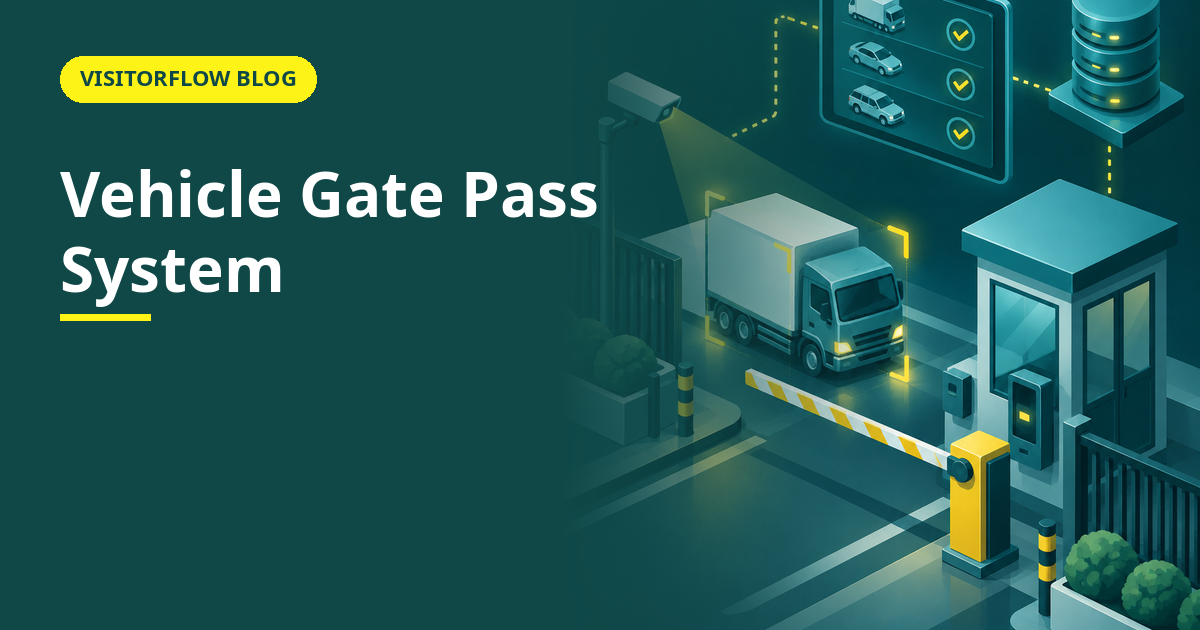
A dark SUV rolls up to the staff gate at 7 pm. The guard recognises the logo on the windshield sticker, waves it through, and notes nothing. Nobody will ever know who was in it, whether it left, or what was in the boot. Vehicle movement is the least recorded fact at most facilities, which is strange, because almost everything valuable that leaves a site, material, equipment, data drives, prototypes, leaves in a vehicle.
A vehicle gate pass system records and authorises vehicle movements: staff and visitor cars, vendor trucks, contractor tempos, company fleet. This guide covers what a vehicle pass should record, how sticker-and-memory setups compare with a recorded system, how to run one without creating a morning queue, and where vehicle records pay off, from parking disputes to theft investigations. Our digital gate pass system article covers material movements; vehicles are the other half of the same gate.
On this page
What a vehicle pass should record
The useful record is short: vehicle number, category (staff, visitor, vendor, fleet), driver name and phone for commercial vehicles, purpose or linked document, time in, time out, and a photo when the vehicle carries material. Anything beyond that is friction that slows the gate; anything less is a register line that cannot answer a question later, which is the whole point of writing it down.
The categories do different jobs. Staff vehicles need a known-vehicle list so the gate runs on recognition backed by a record, not memory alone. Visitor vehicles should hang off the visitor's check-in, so the car and its occupant share one story. Vendor and transport vehicles need the link to the material pass, because the truck and its load are one movement and should leave one record. Fleet vehicles need trip logs: who took it, where to, when it returned, and roughly how far it went before it returned.
The common thread across all four categories is linkage. A vehicle number on its own is trivia; a vehicle number tied to a person, a purpose and a timestamped pair of gate events is evidence. The design goal for any vehicle pass system is to create that linked record without making the gate slower than the traffic behind it, and every design choice below serves that one goal above all others.
Key idea: The vehicle number is the index, not the record. A useful pass links the number to a person, a purpose and a time pair; everything else is optional garnish.
Stickers and memory vs a recorded system compared
| Gate moment | Sticker plus guard's memory | Recorded vehicle pass system |
|---|---|---|
| Known staff car arrives | Waved through on the sticker, nothing noted | Matched to the known list, time noted in seconds |
| Visitor car arrives | A register line, maybe, while traffic waits | Linked to the visitor's QR check-in, no separate queue |
| Vendor truck leaves with material | The number, if the guard wrote it; the load, if anyone checked | Tied to the material pass with photos of the load |
| A stolen or cloned sticker | Works until someone notices | The number, not the sticker, is the credential; mismatches flag |
| "Was that truck here on the 14th?" | Flip through the register and squint | Search the number, get every visit with times and photos |
20% to 30%
of vehicles on a typical unmanaged industrial site are not in any record on a given day, facility security audits commonly find. The unrecorded share is where the risk lives.
Every vehicle on record, no queue at the gate
VisitorFlow records staff, visitor and vendor vehicles with known-vehicle matching, visitor check-in links and material pass tie-ins, all verified by QR at the speed of traffic.
Explore Material Gate Pass SoftwareRunning it without a morning queue, in four steps
The fear that kills vehicle logging is the 9 am image: fifty staff cars queued while a guard types. It is a design problem, not an inherent one, and the four steps below design it away by keeping the record's cost near zero for the vehicles that arrive every day.
Step 01
Load the known-vehicle list before day one
Collect staff vehicle numbers through HR or a one-day parking survey. Known vehicles then pass on a number match in seconds, and the queue never forms for the known majority who arrive daily.
Step 02
Hang visitor vehicles off visitor check-in
One optional field on the visitor form: vehicle number. The car inherits the visitor's approval and visit times, and the gate never processes the same visit twice as two separate records.
Step 03
Make commercial vehicles carry their material pass
A truck's pass is its material pass: the QR on the driver's phone covers vehicle, load, photos and approval in one scan. No separate vehicle paperwork, no double entry or double queue at the gate.
Step 04
Sample-check the known list weekly
Ten random known vehicles, verified against actual occupants, once a week. The known list is a credential; treat it like one, or it silently becomes the largest hole in the system.
Mistakes that recreate the blind gate
- ✗ Recording entries but not exits, so the lot is always "full" on paper and nobody can say who is actually inside during an evacuation.
- ✗ A known-vehicle list that is never pruned, so ex-employees' cars keep their silent welcome months after the farewell party.
- ✗ Letting vendor trucks skip the record "because security checked the load", which separates the truck from its cargo exactly when the pair matters.
Where vehicle records pay off
The everyday payoff is parking: whose car is blocking the ramp, whether the visitor lot is full of non-visitors, how long the contractor's tempo has been "temporarily" parked at the loading bay. Small irritations, resolved from a search box instead of a PA announcement that three hundred people ignore.
There is also a planning payoff that nobody expects. A month of timestamped entries and exits shows the true arrival curve: when the lot fills, which gate carries the load, whether the second gate earns its guard. Facilities that guess these answers staff them expensively on a guess; facilities that record them staff them correctly on evidence.
The serious payoff arrives with incidents. A theft investigation starts with "which vehicles left between 6 and 8 pm", and a recorded system answers in seconds with numbers, photos and linked material passes. An insurance claim on a damaged vehicle in your lot needs the entry record. A dispute with a fleet vendor about trip counts needs the time pairs. In each case the record is the difference between an answer and an argument, and the argument is always the more expensive of the two.
Reader Q&A
What is a vehicle gate pass system?
It is software that records every vehicle entering and leaving your premises, linked to the person, purpose or material it carries, with timestamps both ways. Known vehicles pass quickly; unknown ones get a recorded decision.
Will it create a queue during morning rush?
Not if the known-vehicle list is loaded first. Staff cars pass on a number match in seconds, visitor vehicles ride on the visitor's check-in, and only genuinely new vehicles take any real time at all.
How are visitor vehicles handled?
As an optional field on the visitor's QR registration, so the car inherits the host approval and the visit times. One record per visit, covering both the person and their vehicle.
What about vendor trucks carrying material?
Their material gate pass is their vehicle pass: one QR carries the vehicle number, the declared load, the photos and the named approver. The gate scans once and the pair is recorded together, permanently.
Can it replace parking stickers?
Yes, and it fixes the sticker's two flaws: stickers get cloned and stickers record nothing. The vehicle number in a maintained list is the credential, and every pass is a record with a timestamp and an owner.
How do we handle company fleet vehicles?
Each trip logs the driver, purpose and time pair, which settles trip-count disputes with fleet vendors and gives you the utilisation picture for the fleet you are paying to maintain.
What is the first sign a site needs vehicle logging?
Any question of the form "whose vehicle was that" that takes more than a minute to answer. If the honest answer is "ask the guard who was on duty", the gate is unrecorded and the risk is real.
Bottom line
This week, stand at your gate for twenty minutes at a busy hour and count how many vehicles pass with no record. That share is your blind spot, measured in the only unit that matters to an investigator: vehicles you cannot account for at all.
This quarter, load the known-vehicle list and link visitor cars to check-ins. The metric to watch is unrecorded vehicles per day; when it approaches zero, the gate finally sees what passes through it, every vehicle, every day.
The gate that knows every vehicle
VisitorFlow runs visitor, material gate pass, courier, maintenance and incident workflows on one cloud platform, so people, vehicles and material share one verified record.
Explore Material Gate Pass Software See Visitor Management Software Book a Free Demo
Aadeshwar Modi is a marketing technical content writer who loves writing on technology and AI topics.
- From Register Book to Software: Digitizing the Gate Pass
- Inter-Branch Transfer Gate Pass: Keep Stock True Across Units
- Material Inward Gate Pass: Link the Gate with the GRN
- E-Way Bill vs Gate Pass: What Each Document Does
- Gate Pass System for Engineering and Fabrication Workshops
- Gate Pass Software for Pharma and Chemical Plants
- Office Facility Maintenance Checklist: Daily, Weekly, Monthly
- Breakdown Maintenance Log: Record, Analyze, Reduce
- Maintenance KPIs and Dashboards: What to Review Weekly
- AMC Management Software: Contracts, Renewals and Vendor SLAs