Warehouse Gate Pass System: Make the Gate and Ledger Agree
Published on 10/21/2026 • Updated on 10/22/2026
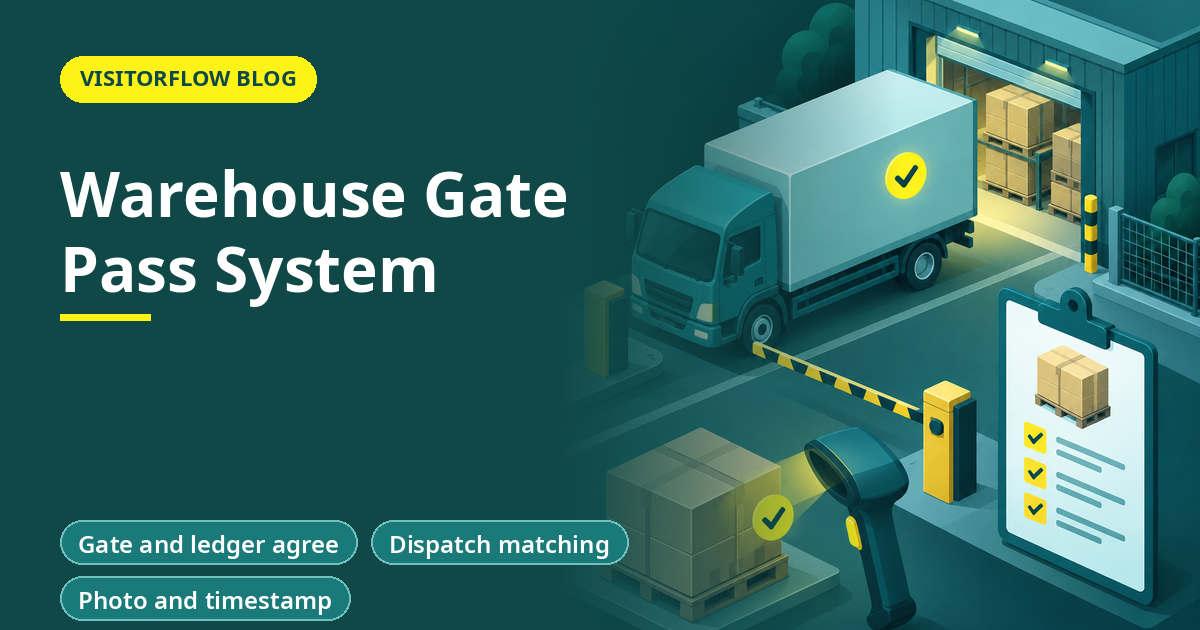
A warehouse gate is a promise made physical: what the system says left should be what the truck carried. In practice the promise is kept by a guard with a delivery challan in one hand and a phone in the other, matching line items at vehicle-window height while the next truck honks. The mismatches he misses at the gate become next month's stock-adjustment write-off, and nobody can say where in the chain the number changed.
A warehouse gate pass system ties the physical exit to the authorised record: every movement matched against the dispatch, return or transfer that authorised it, with photos and timestamps. This article covers why warehouses need the gate and the stock system to agree, how the common setups compare, how to run the flow without slowing dispatches, and what changes at reconciliation time when the gate keeps its own honest books.
On this page
Where warehouses actually lose stock
Rarely through the dramatic route. The losses are clerical before they are criminal: a returned lot counted back twice, a transfer that left but was never received, a damaged-goods exit with no photo that becomes a dispute with the transporter, an over-shipment nobody caught because the challan said 400 and the truck carried 420. Each one is small; the annual total is the number that gets a warehouse manager replaced, or worse, trusted less.
The root cause is that the stock system and the gate are different worlds. The WMS or ERP knows what was authorised; the guard knows what he saw at the window; nothing forces them to agree at the moment it matters, which is the moment before the wheels move. A gate pass system is the bridge: the movement is authorised in the record first, and the gate verifies against that record, in both directions.
1.4% of revenue
is the average inventory shrinkage rate reported in the National Retail Federation's 2023 retail security study, with process errors and external theft the leading causes. Warehouses feel both at the gate.
Gate setups compared
| Gate moment | Challan plus register | ERP-integrated gate pass |
|---|---|---|
| Is this exit authorised | The challan looks right, the signature is unreadable | The pass exists only because an approver made it, linked to the dispatch |
| Quantity actually leaving | Counted at the window, under pressure | Declared on the pass, photographed, verified before the truck moves |
| Returns and rejected lots coming in | A register line, reconciled never | Inward pass tied to the original outward movement |
| Month-end stock reconciliation | Days of matching registers to the WMS | ERP or API sync keeps both sides current; exceptions are a filtered list |
| Dispute with a transporter | Your register against his word | Timestamped photos of the sealed or open load, both ends |
The gate and the stock ledger, finally agreeing
VisitorFlow's gate pass ties every in and out movement to an authorised record, with photos, quantities, ERP or API sync and a reconciliation export your auditors already understand.
Explore Material Gate Pass SoftwareRunning the flow in four steps
Step 01
Authorise before the dock, not at the gate
Dispatches, returns and transfers get their pass when they are planned, with quantity and vehicle filled in. The gate then verifies instead of creating, and peak-hour pressure stops writing your records.
Step 02
Photograph every load, both directions
The photo is the cheapest insurance in logistics. Outward loads, inward returns, damaged goods: ten seconds each, attached to the pass, and transporter disputes lose their oxygen.
Step 03
Sync to the ERP or stock system, or reconcile daily
If an API sync exists, use it. If not, a daily fifteen-minute exception check between passes and the stock ledger catches drift while it is still a conversation, not a write-off.
Step 04
Audit the exceptions, not the total
Ninety-nine percent of movements will match. The audit value lives in the open passes, the quantity mismatches and the after-hours movements: a short list, reviewed weekly, that replaces the annual stock-take surprise.
What changes at reconciliation time
The monthly stock reconciliation shrinks from days to hours, because the exceptions list is already built. The transporter and vendor disputes settle from photos instead of escalation ladders. And the annual audit stops finding the same "gate records incomplete" observation for the fourth year running, which is often the finding that finally funds the fix.
The deepest change is trust in the stock number. When the gate and the ledger agree daily, planners trust the inventory figure enough to act on it, and the safety-stock buffer quietly built to absorb gate uncertainty can finally come down. Our digital gate pass system article covers the general flow across industries; the warehouse version is that same flow with the stock ledger watching every line.
Reader Q&A
What is a warehouse gate pass system?
It is software that ties every physical movement in or out of the warehouse to an authorised digital pass: item, quantity, vehicle, photos, approver and timestamps. The gate verifies against the record instead of creating the record under pressure.
Does it integrate with our WMS or ERP?
VisitorFlow supports ERP and API sync so passes and the stock ledger stay aligned. Without integration, a daily exception export to Excel keeps both sides honest with fifteen minutes of work.
How does it handle returns and rejected material?
Inward passes link back to the original outward movement, so a return is never an orphan register line. The pair stays open until it closes, which is what makes the monthly reconciliation short.
Will it slow down dispatch during peak hours?
No, because authorisation happens at planning time. The gate check is a QR verification against a pre-approved pass with photos, faster than matching a challan at the window.
What evidence does it create for transporter disputes?
Timestamped photos of the load at both ends, the declared quantity, the vehicle number and the approving name. Disputes that ran for weeks over phone calls settle in one email with the pass attached.
Can it flag after-hours or unusual movements?
Yes. Passes outside working hours or over quantity thresholds can require a senior approval, and the exceptions report surfaces exactly those movements for weekly review.
What is the first sign a warehouse needs this?
A stock adjustment nobody can explain, or a reconciliation that takes days. Both mean the gate and the ledger stopped agreeing, and the disagreement is compounding quietly.
Bottom line
This week, pick one transporter dispute or stock adjustment from last month and time how long the true story takes to reconstruct. That duration is the cost of the current gate, measured in your own team's hours.
This quarter, move authorisation to planning time and photographs to every movement. The metric to watch is reconciliation days per month; when it drops to hours, the gate and the ledger are finally the same record.
What left is what was authorised
VisitorFlow runs visitor, material gate pass, courier, maintenance and incident workflows on one cloud platform, so the gate, the store and the ERP tell one story.
Explore Material Gate Pass Software See Visitor Management Software Book a Free Demo
Ed Jhonson is a Sourcing & Marketing Expert who writes content related to Technology and Engineering topics.
- From Register Book to Software: Digitizing the Gate Pass
- Inter-Branch Transfer Gate Pass: Keep Stock True Across Units
- Material Inward Gate Pass: Link the Gate with the GRN
- E-Way Bill vs Gate Pass: What Each Document Does
- Gate Pass System for Engineering and Fabrication Workshops
- Gate Pass Software for Pharma and Chemical Plants
- Office Facility Maintenance Checklist: Daily, Weekly, Monthly
- Breakdown Maintenance Log: Record, Analyze, Reduce
- Maintenance KPIs and Dashboards: What to Review Weekly
- AMC Management Software: Contracts, Renewals and Vendor SLAs